BioPoem
Generative Poetry System
2026
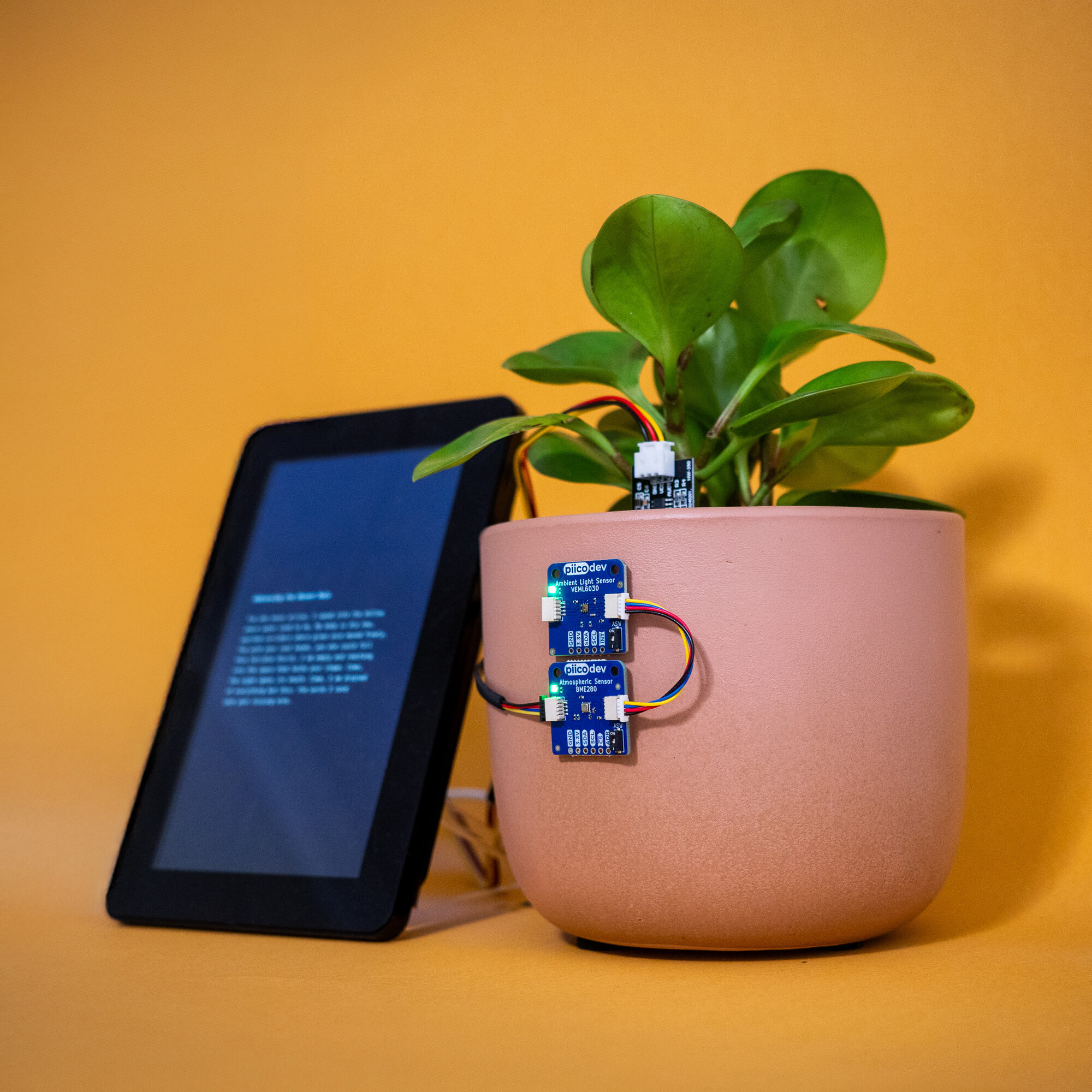
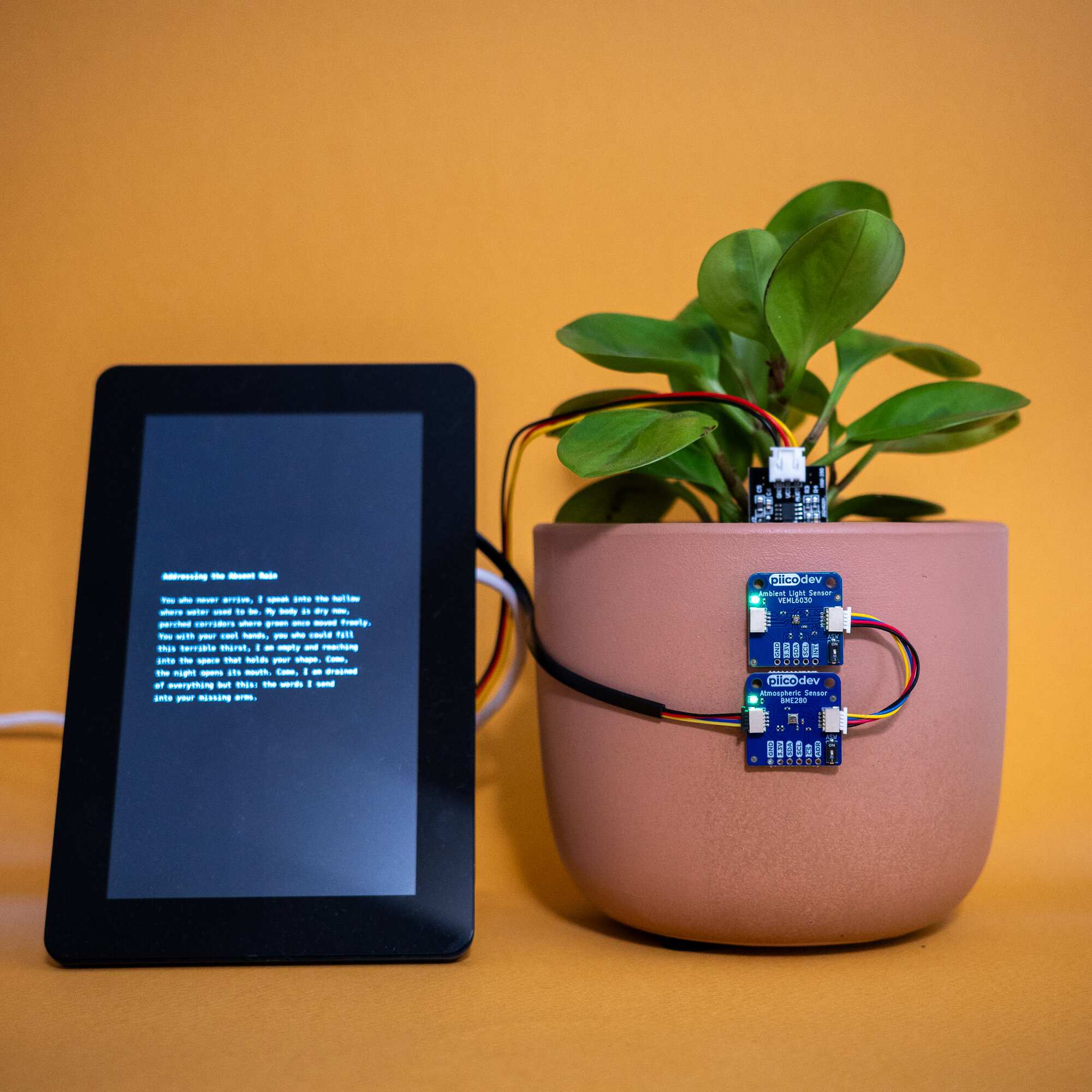
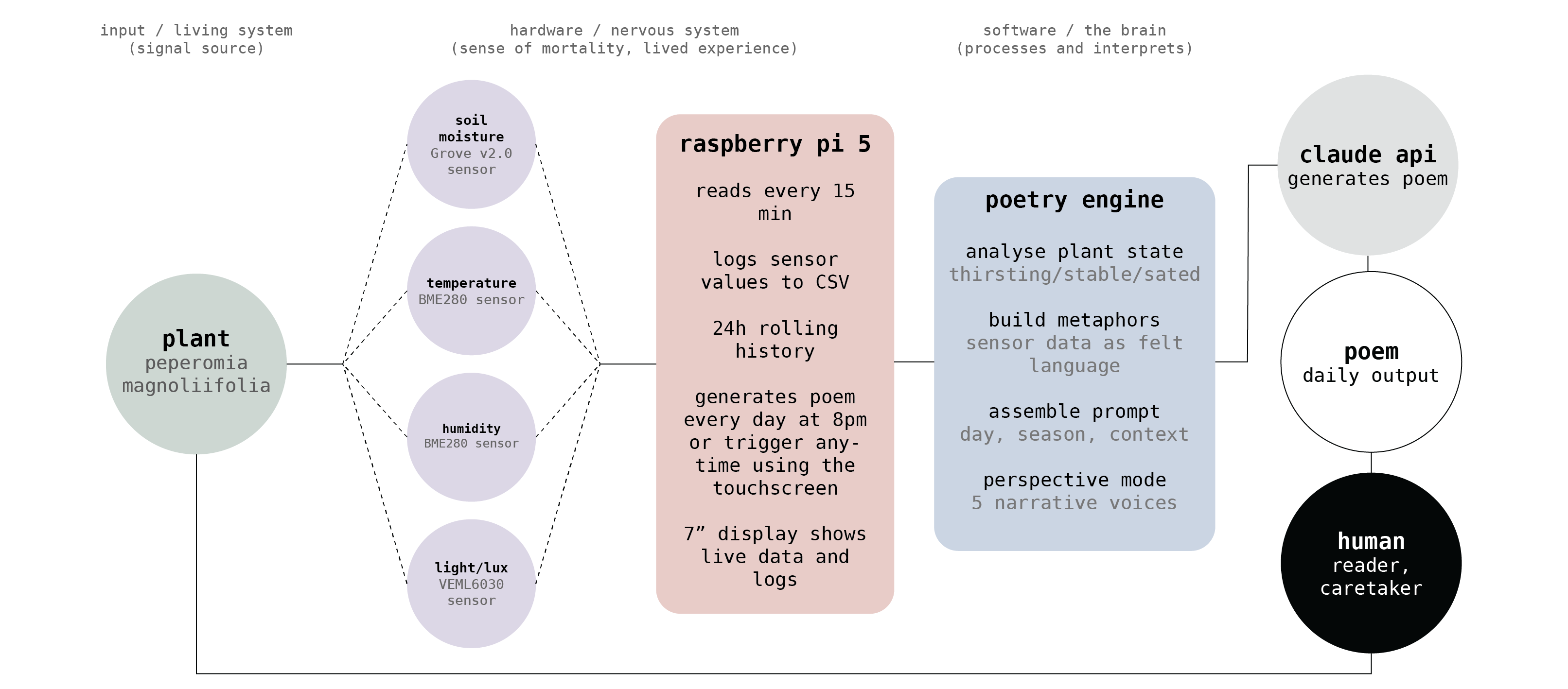
BioPoem is a generative poetry system that turns a houseplant's living conditions into daily poems. A houseplant wired to sensors on a Raspberry Pi logs soil moisture, temperature, humidity and light every 15 minutes. This data is analysed for emotional themes like renewal, exhaustion, and equilibrium, then fed to an AI that writes a poem about the plant's day, delivered each evening.
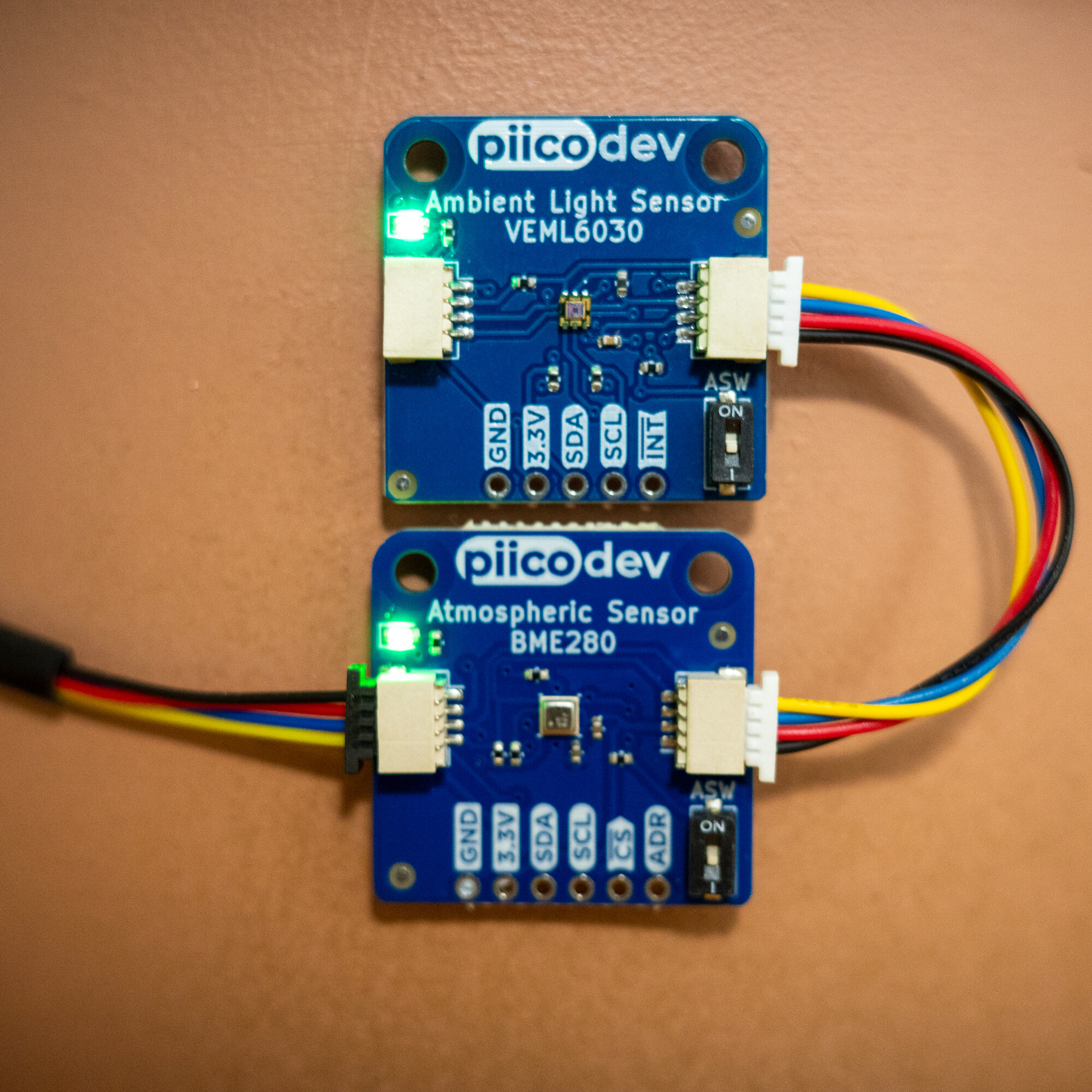
A capacitive soil sensor monitors hydration. An atmospheric sensor tracks temperature, humidity, and pressure. A light sensor captures ambient lux. All connect via I2C to a Raspberry Pi running custom Python software that logs readings every 15 minutes around the clock. A touchscreen dashboard displays real-time graphs and the most recent poem. Each evening at 8pm, the system wakes, analyses the day's data, and begins generating.
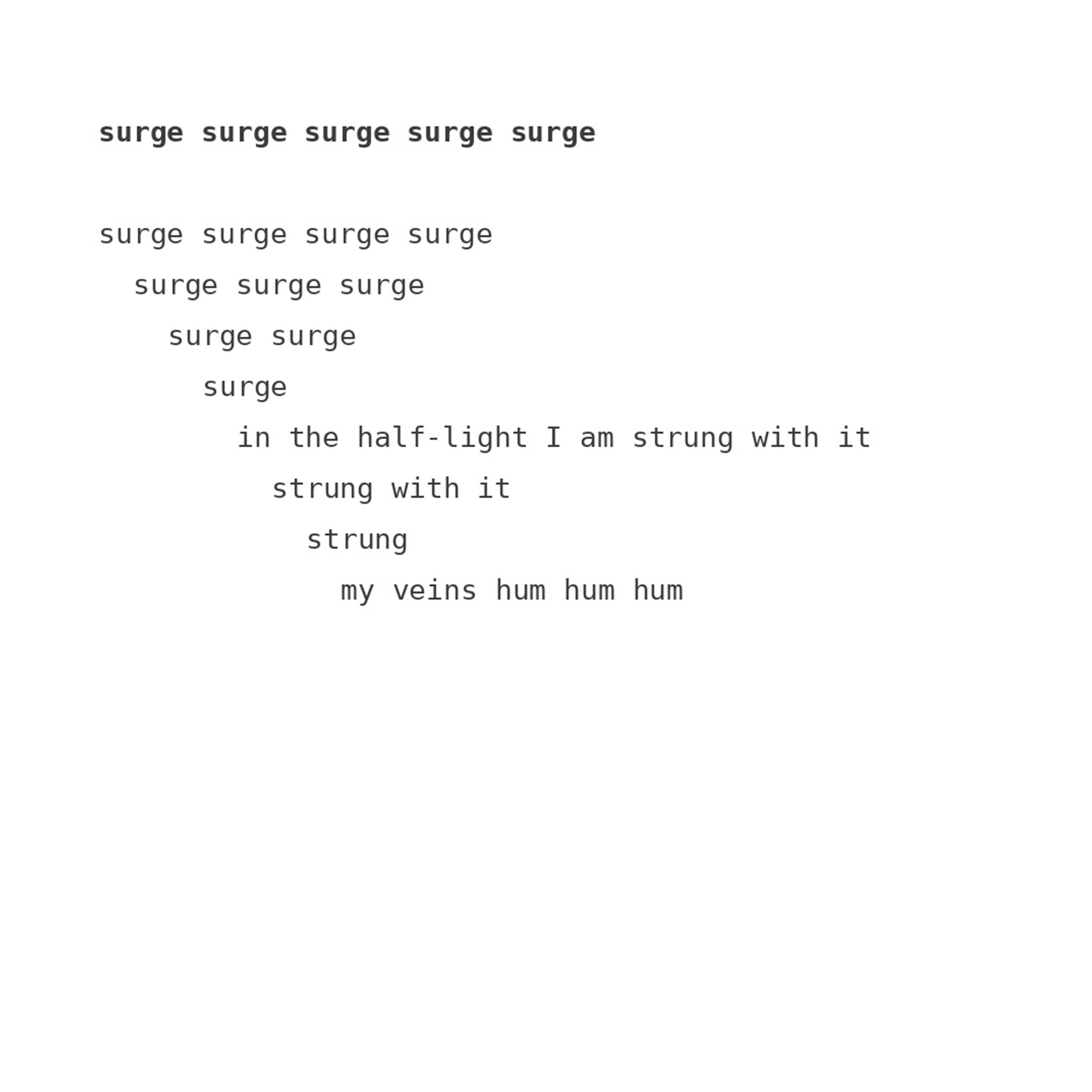
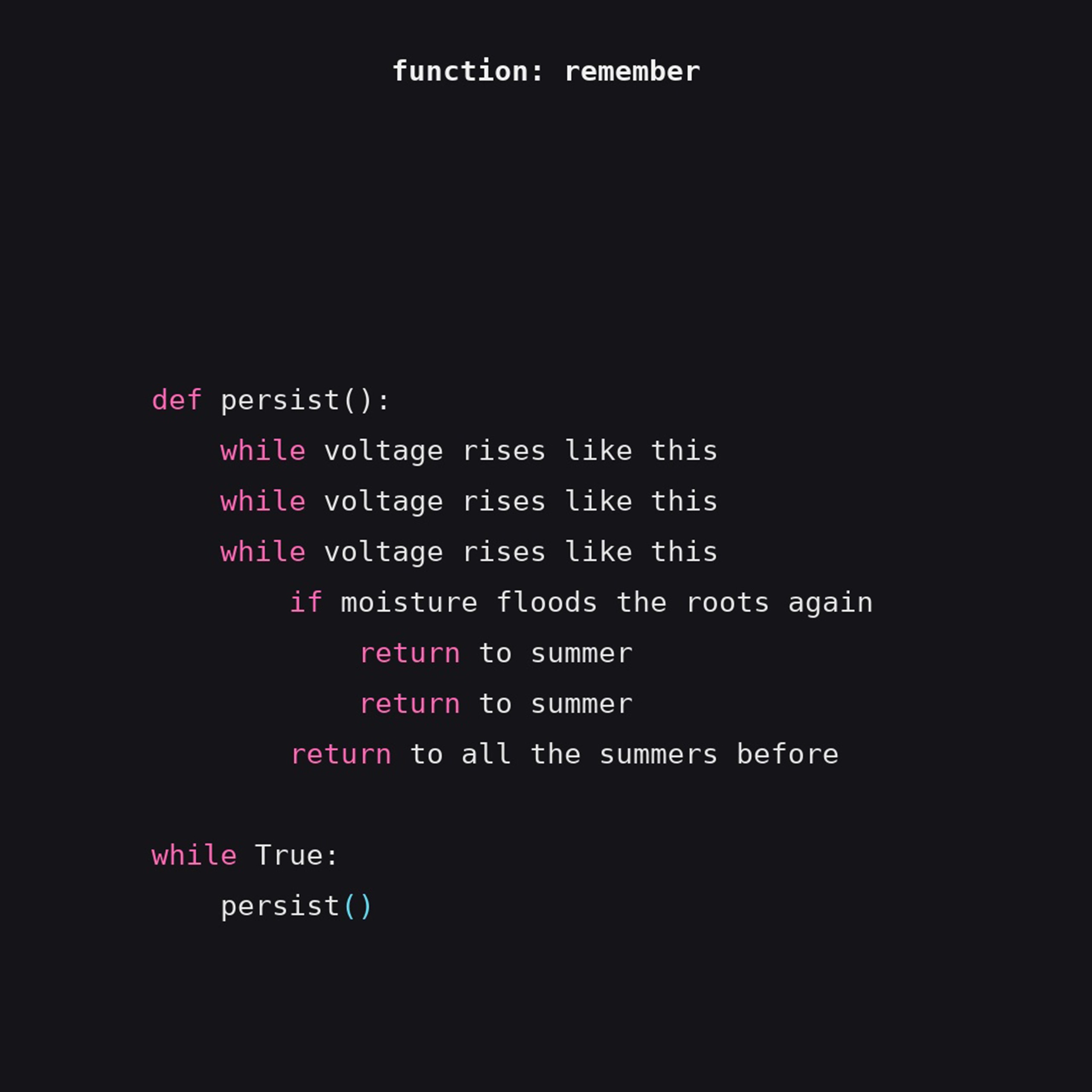
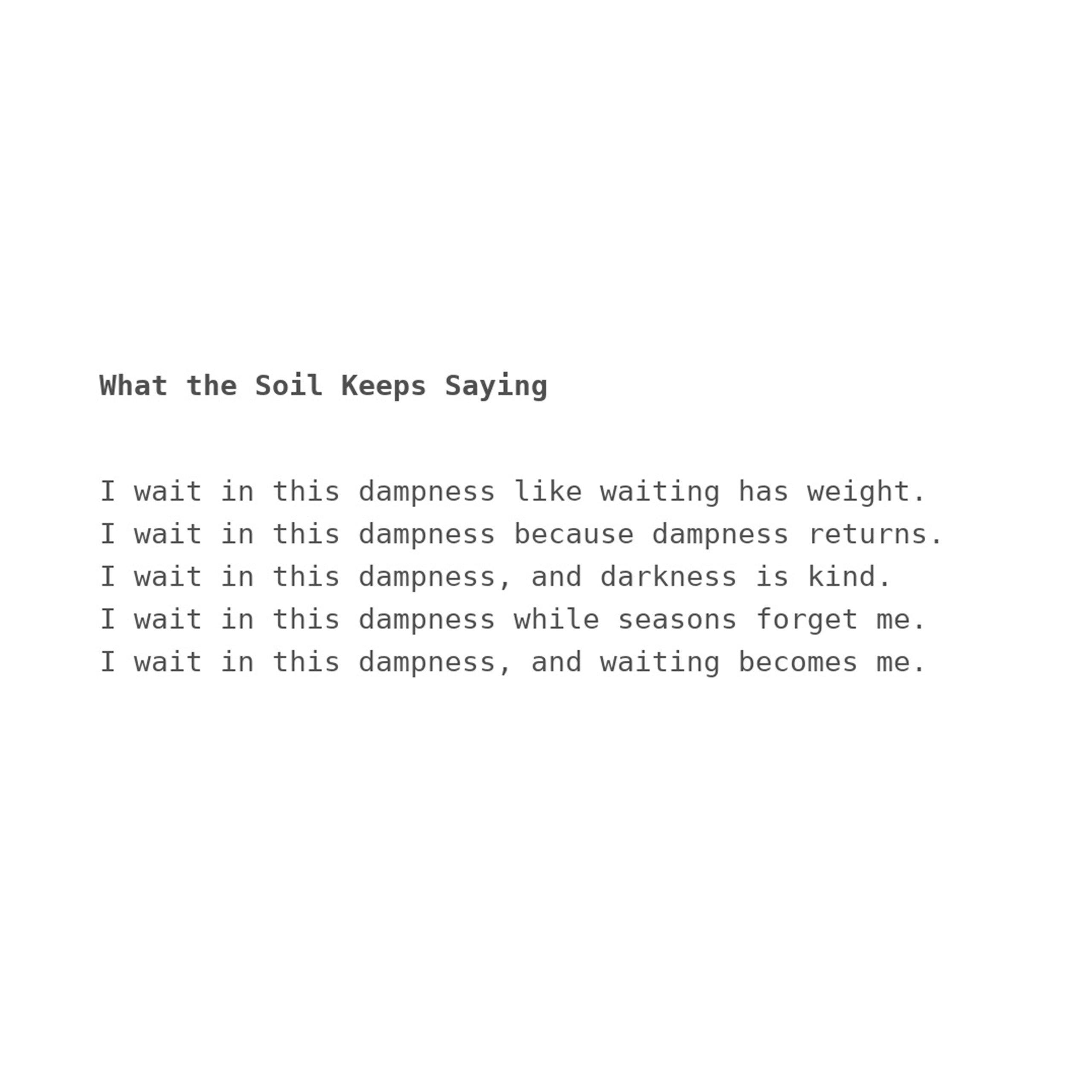
Every poem is grounded in actual conditions. If the soil dried out, the poem may speak of thirst. If it was watered after a dry spell, renewal enters the language. The system draws from 20 stylistic influences, from Alejandra Pizarnik to Mary Oliver, selected based on the emotional register of the day. Poems are rendered as images in multiple formats: light and dark modes, varying font sizes, and occasionally visual layouts where the text itself takes spatial form on the page.
Raw sensor data becomes meaning through layered interpretation. The software analyses 24 hours of readings, tracking not just current values but trends, variability, and patterns. Ten emotional themes are scored using specific thresholds: drying soil suggests depletion, a fresh watering signals renewal, stable readings indicate equilibrium. An anti-repetition governor tracks the past 30 days, applying diversity multipliers so unused themes can outcompete sensor-favoured ones.
Once a theme is selected, the system chooses from 20 stylistic influences filtered by compatibility and recent usage. A visual poetry mode triggers every third generation, selecting spatial layouts based on conditions. The final prompt combines the weather, the time of day, the season and a set of formal rules, and it's built to stop the plant from repeating itself or faking a feeling.